Operational map
Display incidents, assets, routes, responsibilities and resources.
 Consortiumof digital technologies
02 / Consortium expertise
We bring events, maps, video, sensors, requests and key indicators into one operational environment. A situation centre gives leaders and services a shared picture, coordinates response and preserves an accountable history of decisions.
Who it is for
We work with territorial communities, government authorities, municipal utilities, engineering organisations and responsible businesses.
We adapt the solution to real data, regulations, resources and client-team responsibilities. Delivery covers audit, requirements, design, implementation, training and support.
Scope
Modules are refined after reviewing source data and project goals.
Display incidents, assets, routes, responsibilities and resources.
Connect registers, video, sensors and dispatch systems.
Provide role-based views for leaders and specialist teams.
Configure notification, escalation and task control.
Monitor important assets, networks and territories.
Identify recurring issues, trends and resource needs.
Outcomes
How we work
The approach is adapted to the client’s data, infrastructure and responsibilities.
A situation centre begins with events, responsibilities and decisions, not screens. We define incident types, reporting sources, monitored assets, service roles and performance indicators. The map becomes a shared language linking event location, available resources, critical infrastructure, documents and current response status.
Cities may already use dispatch tools, registers, video, sensors, contact centres and sectoral platforms. We determine which data should arrive automatically, which is entered by operators and which remains in the source system. This preserves data ownership and provides a current operating picture without uncontrolled duplication.
Typical events receive categories, priorities, escalation paths, deadlines and responsible teams. Leaders can see not only alerts but also decisions, completed actions and overdue tasks. Event history supports analysis of recurring problems, service workload and resource allocation, turning operational records into evidence for prevention and planning.
A situation centre can monitor critical assets, utility incidents, risk zones, recovery works and public requests. The Uzh River flood-zone geoportal is relevant spatial-risk experience of MagneticOne Municipal Technologies. It is not presented as a reference for a full situation centre, but it demonstrates a related geospatial capability and documented client delivery.
Related projects
Each case states whether the experience belongs to the consortium or a specific founder company.
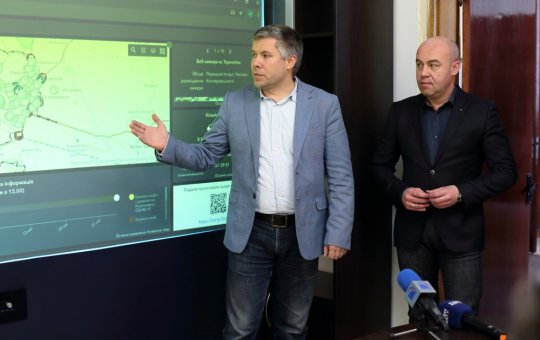 Experience of founder companies
Integrated display of events and indicators for operational city management.
View project →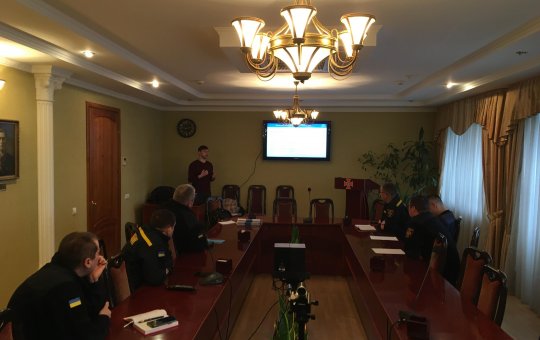 Experience of founder companies
Spatial risk monitoring and coordination of response services.
View project →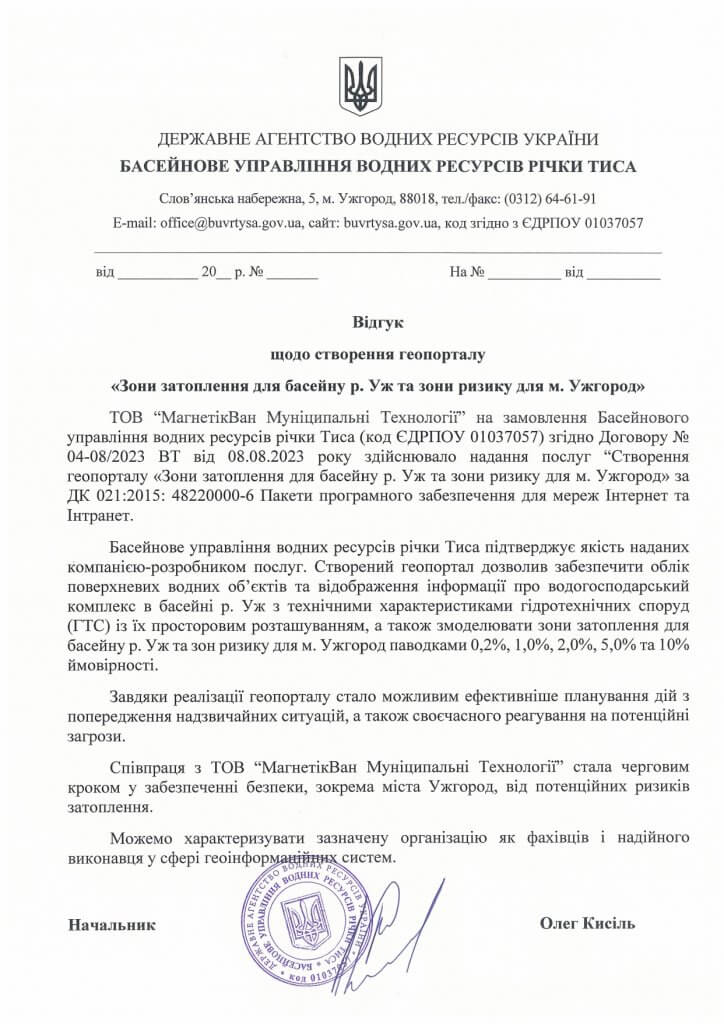 Experience of MagneticOne Municipal Technologies LLC
Digital flood and risk maps for territorial planning and response.
View project →Documented evidence
Scanned letters open in their original form.
Official document concerning the flood and risk zone geoportal.
Open document ↗IT OTG ConsortiumConfirms the consortium’s organisational capacity for complex cooperation; it is not presented as a reference for a specific situation centre.
Open document ↗Practical questions
Potential sources include GIS, registers, video, sensors, dispatch tools, contact centres and sectoral platforms.
No. The solution may start as a secure web environment and later expand to specialist workstations and a video wall.
Permissions can reflect roles, territories, event types and confidentiality levels, with important actions logged.
Preparation begins with a working session involving leaders, dispatchers and responsible services. Together we describe priority events, current response, information gaps and decisions that require control. A minimum first scope, integrations and success indicators are then agreed. Useful functionality can launch without waiting for complete digitisation of every department, while real operations provide evidence for later expansion. Technical design also addresses security, continuity, action logs, resilience, role-based access and staff readiness, so the centre supports accountable response rather than simply displaying information.
IT OTG
Describe the context, expected outcome and timing. We will assemble the right team and propose the next step.
Discuss a project↗